


Published from the official 18 November 2026 release.
UK consumer price inflation ticked up again in October. The Office for National Statistics said on 18 November 2026 that the Consumer Prices Index rose by 3.6% in the 12 months to October, compared with 3.5% in September. The broader CPIH measure, which includes owner occupiers’ housing costs, rose by 3.7%, up from 3.6%. Both monthly indexes increased by 0.5% in October, a slightly larger rise than in October 2025. The figures are in the ONS bulletin Consumer price inflation, UK: October 2026.
This is still well above the Bank of England’s 2% target, and it arrives after the Bank has already tightened policy once this month. On 4 November the Monetary Policy Committee voted 8–1 to raise Bank Rate to 4%, citing the earlier September CPI figure of 3.5% and a projection that inflation would rise further, to around 5% by mid-2027. The October print does not rewrite that decision. It is the last full CPI release the Committee will have seen before its next scheduled announcement, on 17 December 2026.
Key takeaways
- CPI inflation was 3.6% in the 12 months to October 2026, up from 3.5% in September. CPIH was 3.7%, up from 3.6%.
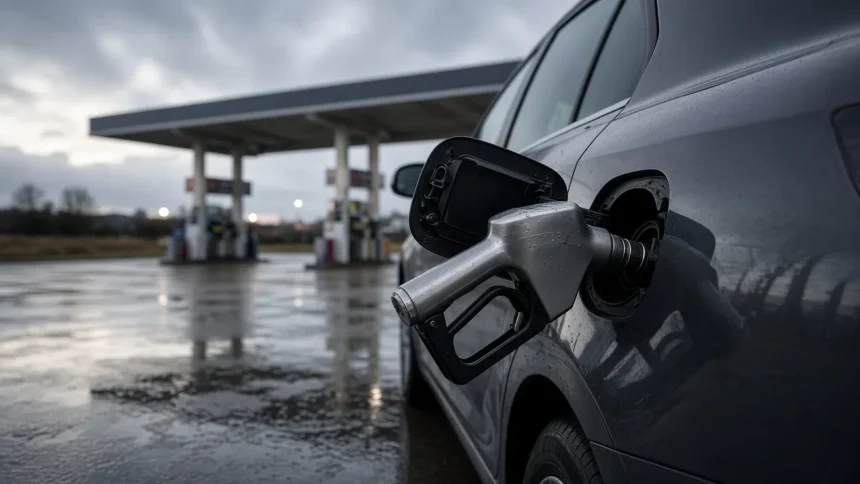
- Transport, particularly motor fuels, made the largest upward contribution to the change in both annual rates. Restaurants and hotels made the largest downward contribution.
- Core CPI, which excludes energy, food, alcohol and tobacco, was 2.8%, little changed from September. The CPI goods annual rate rose from 3.2% to 3.5%; the services rate was 3.7%, also little changed.
- The next ONS CPI release is due on 16 December 2026. The Bank of England’s next Bank Rate decision is the following day, 17 December. Bank Rate is currently 4%.
Where the pressure came from
The ONS is clear about the main driver of the pickup in the annual rate: transport, and within that, motor fuels. Anyone filling a tank in October will not need a long explanation. The same bulletin notes that restaurants and hotels pulled in the opposite direction, trimming some of that upward pressure. On the monthly measure, both CPI and CPIH rose 0.5% in October 2026, compared with 0.4% in October 2025, which is why the annual rates edged up rather than holding still.
The underlying measures were steadier. Core CPI was 2.8% in the 12 months to October, little changed from September. Core CPIH was 3.1%, also little changed. Goods inflation rose, from 3.2% to 3.5% on both the CPI and CPIH goods measures, while services inflation was little changed, at 3.7% for CPI and 3.9% for CPIH. In other words, the October move was not a broad jump in the core, but it was another month in which the official annual rate moved away from 2%, not towards it.
Looking further back in the same ONS table is useful context. CPI was last at 3.6% in October 2025. It then eased, reaching 2.6% in the 12 months to June 2026, before climbing through the late summer and early autumn. October’s 3.6% is the highest reading since that point a year earlier. CPIH followed a similar arc, from 2.8% in June to 3.7% in October. The ONS also notes that CPI was last higher than this October figure in September 2025.
What it means ahead of the December meeting
The Bank of England made its November decision without this October print in hand. Its November minutes pointed to energy prices feeding through, stronger-than-expected activity, and a projection of around 5% inflation by mid-2027. October’s 3.6% is still the current official outturn, not that mid-2027 projection. It does, however, sit on the same side of the target as the Bank’s concern: inflation is not coming down at the moment.
The next CPI bulletin is due on 16 December, covering prices in November. The Bank’s next scheduled decision is the following day, 17 December, according to its Bank Rate page. This article does not forecast that vote. The official sequence is simply that the Committee will have one more inflation release, then it will announce its decision.
What households should actually check
A 0.1 percentage point rise in the annual CPI rate does not, by itself, change a mortgage payment or a savings rate overnight. What can change is the path of official interest rates, and then — with a lag, and only for some products — the rate you pay or earn. If you are on a tracker or a standard variable mortgage, watch the December Bank Rate decision and your lender’s terms. If you are on a fix, your current payment is unchanged until the deal ends; the question is what you will be offered next. Our guides to the November Bank Rate rise and to remortgaging in the UK in 2026 set out that distinction.
For cash, a higher official rate is a reason to compare the rate you are actually earning, not a reason to assume your current account has already moved. Deposit protection should be checked on the FSCS site. The cash ISA allowance for 2026/27 is still £20,000, as we explain in our ISA allowance guide.
This is a report of official statistics, not personal advice and not a prediction of the 17 December decision. The primary source is the ONS October 2026 inflation bulletin.
FAQ
Is 3.6% the Bank of England’s target?
No. The Bank’s inflation target is 2%. October’s CPI rate of 3.6% is the official 12-month outturn, and it is above that target.
Did motor fuels make the whole of inflation rise?
They made the largest upward contribution to the change in the annual CPI and CPIH rates, according to the ONS. Restaurants and hotels made the largest downward contribution. Other prices still make up the level of the index.
When will we get the next official figure?
The ONS says the next consumer price inflation release is on 16 December 2026. The Bank of England’s next scheduled Bank Rate announcement is 17 December 2026.